The First Week is Not a Personality Test

Belonging should not have an audition.
The first week can ask a lot of students before they know the room. They may be invited to introduce themselves, share something personal, and join in quickly while they’re still working out what to expect.
I care about connection, but I don’t think a student should have to reveal a part of their life to earn a place in the class. Shared work can help us get to know one another without making personal disclosure the price of joining in.
“A student can have something to contribute before they’re ready to tell the room who they are.”
A familiar first week activity may feel easy to one student and exposing to another. That doesn’t mean we should stop helping students connect. It gives us a reason to look at what an activity asks them to reveal and whether that serves the learning.
The room should introduce itself first.
Before asking students to introduce themselves, I’d like the classroom to offer a useful introduction of its own.
What happens here?
What do I do first?
Where can I get help?
What do I do if I miss something or need another try?
The answers might be a visible example, a short routine, or a clearly named place to find help. They need to be easy to use, not just explained once on the first morning.
“Knowing where to start is one way a student can feel that the room has considered them.”
Start with contribution, not disclosure.
A shared task gives students something to talk about without asking them to turn their private lives into the lesson. They might interpret the same instruction differently or notice an unexpected detail in an ordinary object.
I love these moments because there is something real to respond to. The conversation can grow from what students make and notice, rather than how confidently they introduce themselves.
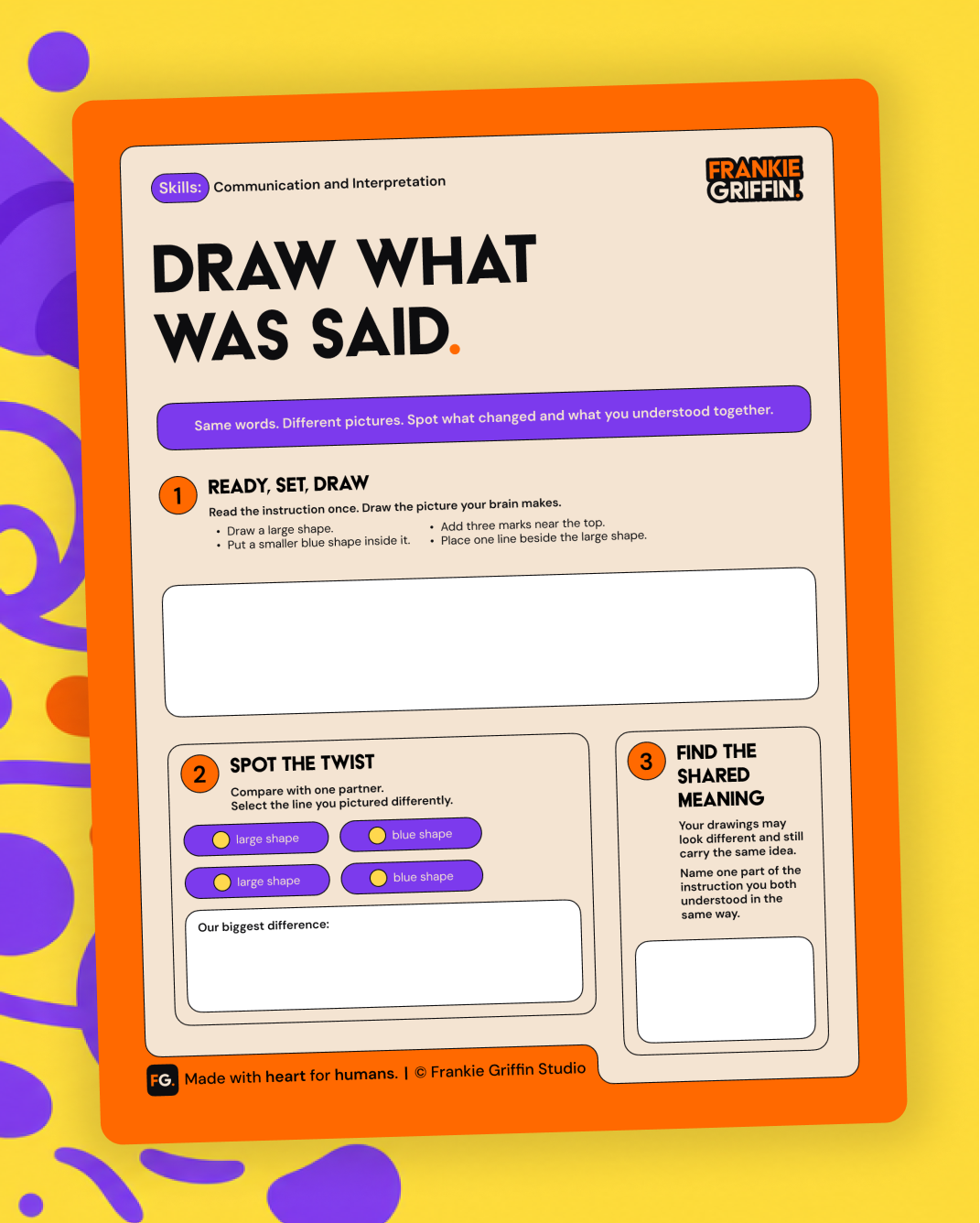
Draw What was Said
Students compare drawings made from the same instruction and look at how they interpreted the words.
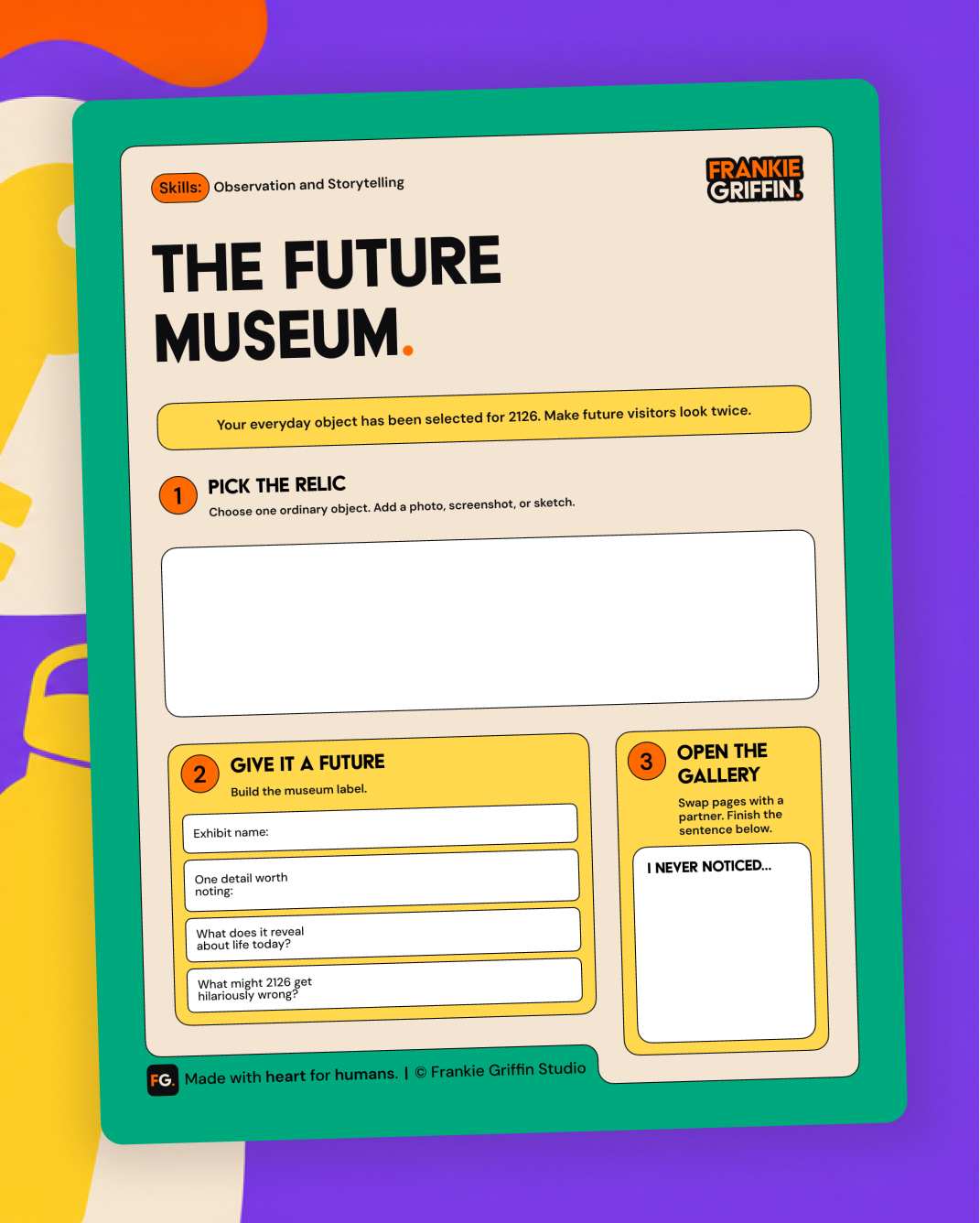
The Future Museum
An everyday object becomes an artifact from 2126, giving students something shared to examine and imagine.
Clarity is part of belonging.
When I look at an activity, I want the page to answer four practical questions. What am I doing? Why am I doing it? What am I making? How will I know when I’m done?
Those answers don’t have to produce identical work. They give students a way to use their energy on the idea instead of guessing what the task expects.
“Clarity reduces guessing. It should never reduce possibility.”
Examples should open the door.
An example can show the scale or shape of a response without deciding the content of everyone’s answer. I look at what it clarifies, but also at what a learner might feel expected to copy.
Could someone choose another subject, bring a different perspective, or take the idea somewhere unexpected and still meet the goal? The example should leave that possibility visible.
Choice needs edges.
An open task still needs a clear purpose. Students shouldn’t have to invent the assignment before they can begin it.
But choosing from a menu is not the whole of agency. I’m also interested in whether a student’s question can change the next investigation, whether a partner’s observation can shift the direction, or whether new evidence can change an answer.
The useful question is what the learner’s decision is allowed to change.
Make rejoining ordinary.
Students will miss a day, lose track of an instruction, or need another attempt. Returning should be part of the routine rather than a fresh problem they have to solve alone.
I want a student to know which task matters now and where to ask for help. The plan also needs room for a conversation, because the work on a list may not tell the whole story.
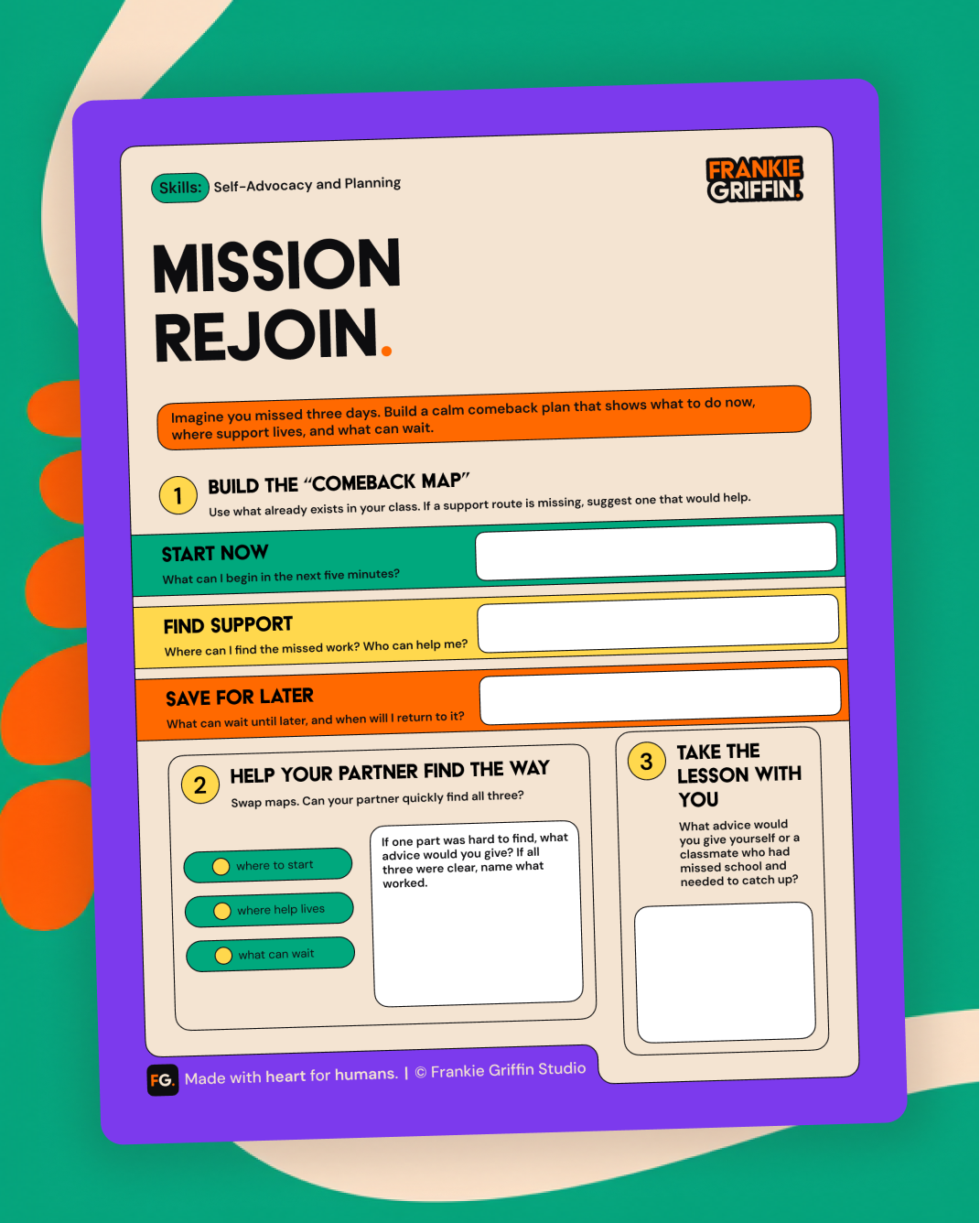
Mission Rejoin
Students make a comeback map showing what to begin, where to get support, and what can wait. They test it with a partner and use it to support a conversation with the teacher.
Let students test the design.
Ask students to show you where they would begin, where they would look for help, and which part still leaves them guessing.
Then use what they tell you to change the task. That response matters. Asking for feedback doesn’t give students much influence if nothing is allowed to change.
A five-question activity check
Before you share it, ask.
Can a student tell what to do first?
Is the purpose clear?
Is there room to work through an idea, not just record an answer?
Does the example help without making every response look the same?
Can students find support and recognize when the task is complete?
A longer explanation isn’t always the answer. The page might need a clearer instruction, a better example, or less to compete for the learner’s attention.
Three ways to begin without a personality test.
Use this to explore how the same words can lead to different interpretations.
Use this when you’d like conversation to grow from an object rather than a personal introduction.
Use this to plan a return after an absence, with the teacher’s support.
“The first week can help students learn how to participate without asking them to explain everything about themselves.”
For me, belonging isn’t something one opening activity can settle. It is built into the ordinary decisions a student meets again the next day, including what happens when they need help or another try.
Use this tomorrow
Put one routine through the check.
Choose a first week activity you already use and run it through the five questions above.
Remove a demand that doesn’t help students meet the goal.
Make the first step, support, and completion point easy to find.
Ask students what still needs explaining, then revise the activity using what they tell you.